Friday, July 26, 2013

I am a teacher. What is your superpower?

On taking over my 4th grade classroom, I found that the students could neither read nor write simple sentences in any language. Most of them were very poor in basic math operations deemed appropriate for their age. They could be quite a handful when they got into their mischievous moods. Later on, I could see a similar lack of knowledge in a lot of students in 7th or 8th standards.

A commonly held perspective goes something like this –
What are these students doing in school? Why aren’t they learning things that are being taught to them? They shouldn’t be coming to school if they can’t learn. Being a student means devotion to education and improvement of one’s self. And this is true for a majority of them in this school. We have an attitude problem in these students. Nowadays, the government is doing so much for them. Education is free in government schools.  Government schools also provide books, bags, stationery, meals and what not. These students don’t want to learn. After all, if they were interested, with hard work and perseverance, they can overcome the barriers of illiterate parents, poor teachers, dysfunctional school and a pedagogically unsupportive environment. I think that most of them are not capable of self-improvement or grasping the prescribed curriculum.

Thankfully, this mindset is beginning to change in the recent times and a lot of people are questioning the status quo of education. The focus is shifting to providing quality education and the onus is being laid on the teacher to improve learning in students and get better results. Still, learning in students is abysmal. Words like creativity and argumentativeness are ideas only discussed in all-India-teacher meets in AC rooms in Delhi.

I had the fortune of participating in a wonderful workshop on Active Math education by Navnirmati this weekend. During this workshop, I met an engineer who has left his core engineering profession to work in the education field. He conducts math workshops with students and teachers. The idea is to propagate activity based math which makes it a flow of ideas linked intricately with each other instead of reducing it to independent chapters which remain abstract concepts coded in numbers in our textbooks. He has been holding workshops for teachers, from elite to low-income schools, for the last 4-5 years. However, he finds that even after the workshop, these methods are not used by the teachers in their classrooms. He was very upset about this.

His perspective –
This is not erudite knowledge. It is freely available for anyone who wants to learn and improve. Even after holding these workshops and making them experience hands-on learning, they still don’t do this in their classrooms. What are they doing in school? They shouldn’t be teaching if they are not motivated enough. Being a teacher implies constantly innovating and striving for improvement. We have an attitude problem in these teachers. I have seen this in teachers across high-income to low-income. After the implementation of the recommendations of the 6th Pay Commission, even the teachers are getting high salaries. It’s common to see them with Blackberrys. I have left my cushy engineering job to improve education. Still, these teachers don’t want to improve. If they were interested, all of our kids would be learning irrespective of other factors. This can also be attributed to the fact that only uninterested and incapable people become teachers. None of them wanted to be a teacher. They became teachers because they couldn’t do something else. Most of them are not even capable of understanding their subjects and implementing these pedagogical methods.

I couldn’t help but smile. There is very little difference between the mindset I mentioned earlier about students and the mindset about the teachers.

I spoke to the teachers in the workshop. For almost all of them, this was their first workshop on professional development. This included teachers who had been teaching for 10-12 years. I had a group partner who had 25 years of teaching experience. Her last training, she recalled, was 15 years ago. She still remembers what it was about.

When I was a fellow with Teach for India, I was lucky to have city-wide training every month. This was in addition to regular classroom observation and one-on-one feedback by my manager, feedback and support by my peers and monthly manager group meetings. A lot of these sessions took us back to remember why we do what we do. They celebrated our work and made us feel good about ourselves. After all of this, I was just an average teacher working tremendously long hours. Despite being in the system, I was outside the system. This was a strong factor which gave me support and motivation.

The teacher is just a human who is a part of the system. She (for convenience, I am going to stick with the pronoun ‘she’ because I think females form the majority of the teachers in our country) has herself studied through the same dysfunctional system. Most of her beliefs regarding education have been built on her experiences as a student and then as a teacher. To change, and in some cases transform, these perspectives built over years, the professional development should be rigorous and of a very high quality. Unfortunately, this is completely absent in India.

As a teacher, she is being supervised by a principal whose knowledge and mindsets are usually even more outdated, if not outrightly incorrect. She has been repeatedly told to prioritize her administrative tasks over her teaching, and admonished if she fails to do so. Her pleas for a smaller class size so that she can focus better on her students are lost to idea of more money. She is given examples of how other schools have 80 students per class which highlight her incapability at managing even 60.

The lesser said about the implementation of the curriculum, the better. The prescribed books are usually ordered by the school without taking her opinion. Schools get a commission on this.  All the students need to answer all the questions at the end of the chapter and fill out even the most redundant tables in the workbook of each subject. The principal might call for them any time and judge all her efforts based on how much the children have written according to the syllabus. If she does an activity or a song in the class, the principal might walk in any time and scold her in front of her students for not maintaining discipline. So much for trying out the activity based fractions that she learnt at the workshop. She would have purchased the materials from her own money because she knew the principal would refuse her the additional expense.

On any given day, a teacher has many other responsibilities apart from teaching - parental figure, clerk, sports coach, PR to name a few. Teaching is a rigorous profession by itself which requires tremendous study, practice and self-improvement. In my social circles, when I mentioned my work, I got respect not because of my profession but because I became a teacher instead of what I was expected to do. My unrelated fancy degree and the sacrifice of lakhs of rupees made me a good teacher by default. I think this was the biggest disrespect to the profession and to hundreds of teachers out there who are there by choice and doing amazing work.

This is how I felt when I was teaching. How many of our teachers feel like this about their profession?
Students from Shree Geeta Vikas Vidyalaya, Govandi

Thursday, July 25, 2013

Privatization of education does not make sense

I recently attended the IIT Bombay (IITB) Alumni Conclave with the theme - 'Education and Skill Development.' I was surprised at the unexpectedly large number of people from IITB working in the field of education. What should have been more surprising, had I not seen this before, was the lack of experience these people have in the education sector, except for having been educated themselves. They have not been trained to be or were teachers, administrators, curriculum developers or anything related to education at any point of time.
Quora is another place where lack of perspective on Indian education is apparent. There are fantastic answers on first-world-issues like the worst date ever, should I tell people that I am from IIT, are commerce girls easier than.... you get the idea. But when a meaningful, albeit slightly vague, question like this -
How can educational sector in India be improved?
gets answers, which are voted most popular, with suggestions like
a. teach without a qualified teacher using quora
b. teach with AFI's movies,
I want to bang someone's head on the wall. However, I must restrain myself for I digress from the topic of this post.

In my discussions with various people regarding education, there is a surprising number of people who strongly advocate privatization of education. They believe that privatization is the panacea to everything dysfunctional in our country.
Elite on privatization
Most educated elite on privatization
I am not even sure why people form this image of private players being efficient, dedicated and quality focussed. They are largely ignorant of the huge challenges that India's demography and geography provides in plenty which are extremely tough for any private player to come to terms with. These people also believe that money and profit are the best incentives ever. More the money dangled in front of people, higher the output.
At this point, I ask them -
What's the output in school education? 
They stumble for a bit and say results. Or some vague ideas about quantifying output.
I ask -
If it's profit making, who is the customer then?
They usually reply parents.
Does that mean that education should be tailored so that it pleases the customer most? 
Usually there's no instant gratification in education. So ways are invented to please the customer regularly. This can be seen in the large number of largely pointless events that fancy schools conduct nowadays.

I am actually not even sure what do people mean by privatization of education - Do they mean an education service run for profit or having a service with private like efficacy?
If education is a for-profit service where the quality depends on the amount of money that is pumped in, then it is logical that education quality will be compromised for people who cannot afford to bear its costs . This goes against the most fundamental principle of universal education which I hope most people stand by.
If it is just about improving the State provided service, typically characterized by lethargy, bureaucracy and low quality - then yes, it should be done. Padma Shri Dr. D.B. Phatak summarized it succinctly at the conclave -
"Education should not be a business but it should be run like a business."

Private education comic
It's just the hat and the suit
Without even going into deep philosophies of education, there are various obvious advantages of education being provided by an autonomous, knowledgeable service provider whose motivations are not clouded by profit. If it's autonomous, it cannot be bullied. It can focus on learning outcomes and not on appearances and events. Since it's non-profit, there is no temptation to fake results for there's no money spent on marketing.

Anurag Behar is one of the best writers on Indian education system that I have come across. I have mentioned excerpts from his writings that I find most relevant.

Cost of Privatized Education is probably the most compelling out of these. It also suggests further reading.

"... The belief that private schools perform better persists in spite of evidence, systemic experience and theory... First, consistent evidence across the world, including India, shows that private schools do not necessarily perform better than public schools. The difference in student learning levels between private and public schools arises primarily from differences in socioeconomic background of their students (relatively privileged ones go to private schools), selection of students (private institutions select one’s who are already able) and other additional support factors outside the school (tuition, going through pre-school etc). In simple terms, this means that private schools in themselves do not do a better job at education than public schools.
This dominant belief and public perception about superiority of private schools is also influenced by superficial markers of quality that are more social in nature—such as wearing ties and good shoes, “good” classmates, “English medium” etc.,—rather than educational... 

... On the one hand, private schools don’t do a better job of providing individual access to good quality school education, on the other hand, a substantially private (for-profit) schooling system works at cross purposes to the societal goals of education, hardening socioeconomic differences and inequity.

... Let’s look at the extent of privatization of basic schooling across countries in terms of percentage of students attending private schools. These are the rounded-off numbers: the US 9%, Japan 6%, South Korea 2%, Scandinavia 1%, the UK 6%, France 14%, Germany 4%, China 4%, all OECD 10%. The world average for basic schooling (up to age 14) is about 14%. The number for India is 25% and growing rapidly; our contribution is what is pushing up the global average. We are global champions of privatization in schooling–by a long margin.
Even countries completely committed to free markets and a dominant role for the private sector, have a public system for schooling. Shouldn’t we pause and reflect on the monumental mistake we are making as a country?

... The only solution to India’s problem of education is in improving our public schooling system. This will require hard, sustained effort for decades and substantially higher investment. But what we see with schools is merely one aspect of a deeper problem: the widespread abandonment of public systems in all spheres…in healthcare, in water and environment."

Excerpt from Profits and Schools -

"... One set of issues arises from the ever-present information and knowledge asymmetry between the provider of education i.e., the school, and its users i.e., children and parents. In a situation like this, the provider must do their best—an honest attempt to deliver good service—irrespective of whether the user discriminates between what is good and not-so-good.
This is a professional obligation. You do expect that a doctor would do her honest best for her patient, although the patient may have no idea what is good (or best). The school situation is akin, but the professional obligation on the school is even greater...

In this situation of asymmetry, to do an honest job of its professional obligation, the schools’ cost structures become such that the fee required to make it sustainable (forget profitable), is not available. It’s not available primarily because it’s simply unaffordable by a very large majority in the country.

The unfortunate fact is that there are hundreds of seemingly respectable schools giving short shrift to the basics of good education. This pursuit of profits through short shrift is scandalous....
At the heart of all this is an acceptance that money and economics are not necessarily the most relevant frames of reference for all human endeavours. And that profit is not a legitimate pursuit in a social relationship of trusteeship such as education."

Another excerpt from Profit and Higher Education -

"Pick up any list of the world’s best universities and go through those names. You can go through the top 500—not just top 10 or 20. You will not find a single for-profit university.
The point is simple, high quality higher education is not and cannot be a for-profit enterprise. This is not an ideological issue; it is merely an economic implication of what is required to have high-quality higher education. Three of these requirements are: deep and broad-based research, a good student faculty ratio and a multidisciplinary faculty ranging from humanities to applied domains.

... To address our problems in education, both school and higher education, there are just two ways ahead and both are needed. ... for our problems of quality and equity in education, the government has to invest more money and improve its performance."

All the three articles by Mr. Behar deserve a thorough reading (like most of his articles). 

Saturday, July 6, 2013

100th post: Kaanton ko murjhaane ka khauff nahin hota

As my blogger account tells me, I have written 99 posts. 100th of anything usually implies history and nostalgia. And one can say that I am in a historical mood nowadays. Visiting ancient cave drawings in Bhopal, staring at Taj Mahal (again) and experiencing the wonderful old Hindi movies like Chalti ka naam Gaadi, Mughal-e-azam, Chupke Chupke and Deewar. Such cinema! Why don’t we make movies like those anymore? So much trash is being produced (ref vigilidiot). 

Today, I am meeting people from a socio-economic class where sacrifice is choosing to do an exciting fellowship paying me 23000 pm (which, by the way, is more than 4 times the average national income). People who are afraid of failure, risk, lack of Bisleri bottles and absence of air-conditioning. Madhubala's quote as Anarkali to Salim - Kaaton ko murjhaane ka khauff nahin hota (Thorns do not have the fear of wilting) - has become the quote of my life. 

This post is a tribute to my nanaji (mother's father). A fond recount of his stories by his (possibly favourite) grandchild. Stories which make me giggle, smile and salute him. I met him recently during my visit home and this was the first time I saw age showing on him. A year ago, he used to go for 3-4 km walks every day, get milk, lift heavy stuff and do more than what 20 year olds like me do nowadays. I don’t think I have ever seen tiredness on his face or heard a complaint from his lips. However, when I saw him this time, he had lost weight and got tired easily. He is a shadow of the man he was until recent times.

Born in a poor baniya family, my nanaji’s father had a kirana store (shop which sold ghee). These origins were apparent when he was diagnosed with artery blockage.
The doctor said - "aapke khun me ghee kaafi lagta hai." (You seem to have a lot of Ghee in your blood.)
To which my nanaji nonchalantly replied – "Arey! Humaare bapuji ki to ghee ki dukaan thi. Jab man kiya, kanaster me se 1-2 phunki (1-2 handfuls) to aise hi munh me daal lete the." (My father had a ghee store. Whenever we felt, we used to gobble 1-2 handfuls of it.)

When he finished his 12th standard, his father announced – "ab kal se dukan pe aana shuru karo." (Start coming to the shop from tomorrow.
Nanaji wanted to study more. But he knew his father would not allow because he couldn't afford his fees. Most readers (and the writer) of this blog will probably never understand the emotions of a 17 year old boy who wanted to study more but could not afford to. He went to his mother and expressed his desire. His mother patted his head and said – "Chal. Tere nanaji ke paas chalte hain. Wo tujhe padayenge." (Let's go to your grandpa. He'll educate you.)

So nanaji’s nanaji was the one who paid for his college fees. Nanaji wanted to study engineering. However, in order to borrow minimum amount from his nanaji, he settled for a diploma from Roorkee University (now IIT Roorkee). In a way, he is the first IIT-ian in the family, long before yours truly got lucky and made it through.

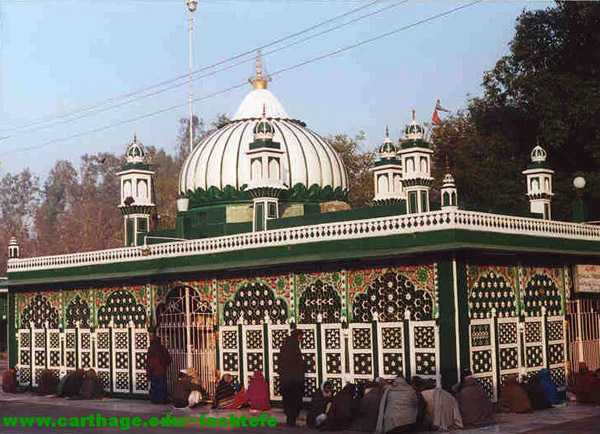
Piran Kaliyar in Roorkee, Uttarakhand
There’s a Piran kaliyar ka mela (fair) held annually in Roorkee. Nanaji fondly recollects running away with his friends from the hostel in the middle of the night on their bicycles to attend the mela.
Phir kehte hain – "Mele me to hume kya hi karna tha, hum to wahan ladkiyan dekhne jaate the."
Then he says - "There was nothing in the fair for us. We just went to see the girls."
(Yup! It’s in the genes)

After his diploma, he was employed by the UP irrigation department as an overseer. This was a stagnant position. To make the engineering cadre, he did a course (AMIE) and made it as a junior engineer. He was transferred to UP hydel division. In those days when electricity was a luxury and irrigation plans for the country were being made, nanaji created and executed those plans in reality. Take him to small towns in UP and he’ll point out – "ye water tank banaya tha, ye power plant banaya tha, yahan road banayi thi, ye canal and bridge banaya tha." Towns owe their current electricity, water and transport to his tenure. He’ll talk about the days when he used to measure canals for miles on his bicycle in the hot sun. Sounds simple but it's hard work in the hot sun.

I have seen many of my friends complain about 13 lakhs and that all of it vanishes. They don’t have to support their parents, educate siblings and get their sisters married off. In his family, nanaji was the only earning member. He educated all his brothers. He got all his 4 sisters married off. Not to mention his 2 sons and my mother. Everything very happily. He took a lot of pleasure in it. And now after doing all that, he asks me – "beta tujhe paise to nahin chaiye? Mujhse 1 lakh gift le le." (Don't you want money? Take 1 lakh gift from me.)
Iron-man anyone? And just in case someone is wondering, this is honest earning. He used to get transferred from the department almost every year because of his honesty.

The best story about him that I learnt recently - he has been to jail! Post-independence and not for a crime.
In 1980s or 1990s, a certain section of UP engineers organized a strike asking for pay raise and some policy changes in their board membership. All of them were put in jail for 12-13 days. Sounded tough. I imagined it being a hard experience.
Apparently, it was a party inside. All Class-I government officers sitting in jail. Jailor coming and chatting with them every evening. Huge amounts of food, kilos of fruits and dry fruits coming from families into the jail. People were fatter when they got released. Nanaji and his friends ate whatever they needed and distributed the rest to the regular inmates. These jailed engineers wanted better drainage and western toilets.  Nanaji was the only civil engineer in the whole gang. Nanaji spoke to the jailor and said - "Hum banwa denge." (We'll get it made.)
The jailor was delighted and the jail was upgraded during their stay.  Nanaji supervised the construction and voila – jail now had modern toilets. Imagine the inmates' happiness – they had clean toilets and cells and were now getting fruits and dry fruits. Nanaji talks about getting massages every day from the inmates and various people, government and otherwise, coming and congratulating him. I can imagine him lying and getting massages royally while people chatted with him. Finally, all their demands were met and they were released with much fanfare and customary garlands.

I always believe that life should be an interesting tale. I have high standards to live up to.

Saturday, May 11, 2013

Ulterior motives for the class picnic


The best part about the fellowship was that each day spent with the kids was different. Sadly, most of the precious moments spent with the kids, especially with my poor memory, slip out of the mind.  A few lucky ones make it to facebook. This incident happened in my first year of teaching.

This was the end of unit 4 and I was making the English unit assessment. Students get different English papers based on their reading comprehension ability. I wanted to give ‘Anna’s magic coat’ from readinga-z which has stories based on reading levels. (I recommend reading the story). I have always been skeptical about giving stories from readinga-z. I feel that its content is made for white suburban American children. My kids led a very different life. My kids should not be judged on words and concepts they are not going to be a part of their lives. For example, cupcake was an important word in the story. A game called ‘red rover’ was also mentioned at the end of the story. Even I didn’t know what ‘red rover’ was. As much I liked the story, words like these made it difficult for me to give it as an assessment.
I brought my dilemma to then-manager Katelyn and used this example to complain that it was so hard to find texts based on reading levels, text is American and the levels can’t be trusted. Katelyn just told me to make the kids experience the vocabulary.

 "Katelyn Voice" - You have to expand their horizons. If they don’t know what cupcakes are, show them. Hell, have a picnic and eat cupcakes and play red rover.

I was incredulous. Did she expect me to have picnics for each new word that my kids came across? You got be kidding me.


However, that’s exactly what happened. I announced a class picnic in school since it was too much hassle to take them out. I got cupcakes and cookies and Aditya, an American friend (keeping in tune with the inherent purpose), to volunteer. Actually, I had got muffins instead but I told them they were cupcakes (#superteacher award).
Blue tarp was spread on the ground and kids sat in circles while ‘cupcakes’ and other food items were distributed. Then, all of us played Red rover. Other classes saw this and were jealous. Unfortunately, there are no pictures of this event.
A few weeks ago, I asked the kids if they remembered the picnic we had the previous year. And yes they did. They also remembered how many cupcakes they got. They had forgotten the name of the game but remembered that it involved breaking lines.
This memorable class picnic happened just because their Bhaiya wanted to give a story to some students, not all, with the word ‘cupcake’ in their English test.

Saturday, April 6, 2013

Student Writing: Amrita's lunch with Salman Khan

The first student writing by Muskan was a super hit and received more publicity than the regular posts. 

Last month, the kids were supposed to write on "Lunch with a celebrity." 
First step, learn what a celebrity is. Then think about the celebrity you want to have lunch with.
I was in class when this was being done. The first response I get - Honey Singh. *Bangs head on wall* Salman Khan and Akshay Kumar were the winners by far with Dhoni being popular among the cricket enthusiasts. Anyway, there were some good writing samples. 

Amrita wrote about her lunch with Salman Khan which includes a foreign trip and other nice heroines among other things. Clearly, my realistic geography teaching has been chucked out of the window. I was pretty happy when I started reading it initially. However, I think I have become 60 years old when it comes to my children. For some reason, I got very protective. I was ranting on - "Is this how she really thinks? She is 11 years old! Why is she talking about make-up and boys?" 
That was until Shruti told me to shut up and stop acting like an overprotective father. I will like to point out certain bits that really made me nervous. As last time, I have tried to present the piece in its original form except for some word corrections. Minor grammatical errors have been kept intact.

Lunch with Celebrity

Hey! My name is Amrita Dinesh Singh. Can you guess what a beautiful thing happened on my last birthday? I got best and beautiful surprise on my last birthday. I had lunch with my favourite celebrity. The name of the celebrity is SALMAN KHAN. I was surprised, because he is so handsome, he had 6 packs (nervousness begins) and he jokes more. No one gets chances to have lunch with him.
But, I got chance to have lunch with him in USA. This is my first time to travel in aeroplane. I have to ready to go USA. I was afraid, because I didn't have new dress. All heroines helped me to find a new dress for me  in shop. But I don't like any dress. I was very afraid. And I was afraid that how will I get ready. I had request to the heroines to do my make-up. 

The heroines said that they will do my makeup. Then SALMAN KHAN (always in capital letters) come and give me a box. When I open the box, in the box, there is a new, pretty and beautiful dress. The colour of the dress is pink which is my favourite colour. I went to changing room and changed the dress and wore the new, pretty and beautiful dress. We went in the airport to take the aeroplane. When we got into the aeroplane, I was afraid because first time I'm going to USA. When we went to the USA we went in the biggest hotel of the USA. We ate the lunch and after lunch we traveled in train and saw all the USA. 

After we saw all the USA we came back to India. When we came back to India, then he take me to his studio. When we went there, then I saw that it was so dark. (I am almost sweating now and wondering what next). When I put one step in, then suddenly the lights switch on and I saw a big chocolate cake (Hallelujah! There are lights and there's a cake). Then suddenly all the heroes and heroines came and wish me 'Happy Birthday.' Then I saw that they had called my family (Everything's safe now that they are here). Then I cut the cake and give to everyone. And played games and dance on my favourite song. It was more fun and we enjoy it a lot. 

Everyone gave me gifts. And they also give me their autograph. And they take some photos with me. I was feeling so happy.
----------------------------------------------------------------------

Looking at it objectively, it is a really good writing piece. I might be overprotective or crazy and that's probably the last thing I and people who know me would have expected but they are my kids.

Anyway, I can't find Swati's space adventure with Akshay Kumar. It'll be up if I do.

Saturday, March 30, 2013

Student Writing: Muskan on 'our' library


I have had the joy of reading some of the best writing samples recently and I have wanted to put them up for a while. This is the hopefully the first of many in the student writing series. I have tried to present the piece in its original form except for some word corrections. There are some minor grammatical errors which I have kept intact. I have added some pictures as well.

A few weeks ago, Shruti (of the guest-author-of-the-previous-post fame) told a few students to write about the library. Muskan's piece, especially the opening sentence, blew me away. Its simplicity and expressiveness was completely unexpected. Here's Muskan in her own words talking about 'our' library.

Our Library

Our beautiful, little library with a small door painted in red colour above Mahalaxmi Dairy, is every child's dream come true. And it is located in Kamraj Nagar. 

Prachur Goel and Anish Nair, our Bhaiyas, started the library in September 2012. First, Bhaiya gave every student library pass. Our library is small but it is filled with books. Every book were keep in order wise on the shelf. 
Because in our library there are many shelves and one balcony. Library starts at 2 o'clock till 5 o'clock. And I had notice mostly girls come in the library to study. And generally girls and boys were interesting in puzzles. And I had also notice every time on Prachur Bhaiya's mouth there is motto for books. And the motto is
"Keep as it is."

Prachur Bhaiya and Anish Bhaiya and both Didis (Neha and Shruti) are in the library with many new Didis and Bhaiyas come from international countries to see our library and join us in studying. Every day we do something new in the library like brief description, talking about new arrivals etc. In library, my most favourite book is "The Banana Robber and other stories" written by Enid Blyton. 
But I dejected...

Her writing ends abruptly with "But I dejected..." On asking her about it, she replies that she intended to write about her Bhaiyas (which means us - Anish and I) leaving and leaving her dejected. She had left it for later but now wasn't interested enough to complete it. It's brilliant nevertheless. 

Upcoming: Amrita talks about her lunch with Salman Khan (my misgivings included).

If you would like to provide more books for Muskan and others to read, check out my wishlist.

Tuesday, March 26, 2013

Readers visit a book store

For the first time ever, the blog has a guest post written by my co-teacher Shruti. I think that it's a beautiful write-up and a pleasant change. She is much more succinct and paints a vivid picture of the wonderful experience. Pictures are courtesy Anish who has been handling the camera for the past few months. Here is Shruti in her own words -

Off late, I have increased the number of read-alouds in class. More often than not, the meticulously picked out book from the library, intended to be a novelty for the kids from my side is intercepted by Soumya, who enthusiastically whispers the next events in the story to her neighbour as I read in class. I give her a silent disapproving look, afraid that she might ruin the story for her friend.  I am greeted by her smiling face in the recess, to be told that she has read ‘this’ book too. She even offers to pick out the book for the next read-aloud.

Soumya is one of the nine kids we took to The Comet Media Foundation at Fort on 8th February to celebrate our dedicated, passionate readers. As a bonus, they were asked to pick out a book for their library to be added as their selection. We spent a considerable time chalking out the list; elated about the fact that we had so many avid readers, disheartened that we could only take a few.

The afternoon heat that day did not deter the girls, Gayatri, Ragini, Rashmita, Yamuna, Nameera, Saira and Soumya from dressing up in their finest salwar-suits. The boys, Ravi and Karan wouldn’t be bothered with clothes and were the first ones to arrive, tugging at Anish’s shirt urging us to leave.

It was a comfortable train ride, with conversations having questions like “Didi, will it be a big bookstore?”, “Will we be allowed to talk there?” or the one which was asked every five minutes - “How much more time Didi?”

A brief walk to Hutatma Chawk got us to a building, with The People’s Bookstore on the ground floor. The watchman directed us to the second floor. A narrow but creatively decorated passage led us to a tiny room with bookshelves stacked on all sides with books and games. The place housed a range of books by Tullikha, Pratham, Tara and a plethora of simplistic but interesting toys. Within five minutes, each kid had found a book they liked and had started reading them. Karan was especially fascinated with the wooden caterpillar and suggested we get that for our library.

Karan with a toy
Yamuna playing with the blocks
Ragini is focusing on her puzzle after reading through a few books
By the end of thirty minutes, Anish found himself humming a Malayalam song from a multi-lingual book (which was picked up by Nameera later) and I was busy building the ‘perfect’ house with Rashmita out of colourful wooden blocks. Two hours later, all the kids had selected books for the library, all without any say from our side. Rashmita hoped that all the students liked the book she picked up. Gayatri was confused between two books that she claimed she loved equally. She made up her mind after a twenty-minute long contemplation.

A lovely picture of Gayatri and Shruti sharing a laugh
Rashmita in full concentration

Ravi, our Science enthusiast, was a bit disappointed about the place not having too many science books. But as we stood to get our books billed, he noticed a stack of thin, light-coloured books. They were by Arvind Gupta and contained beautiful science experiments. Ravi’s face lit up when we told him he could pick up two. We ended the day with lovely ginger biscuits and bun-maska at German Bakery.

It's now Ravi's turn to play with the blocks

The library now has these books with the kids’ names on them. Every time those books are picked up, it is a reminder to us about how far we’ve come; from making do with all the books that were donated to us, to having our kids pick out new books by themselves for ‘their’ library.
Soumya is pretty happy here