Friday, December 4, 2015

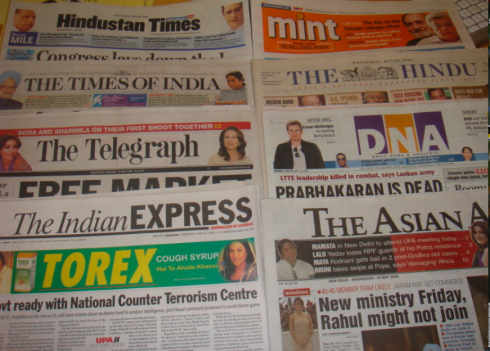
Where to read news in India

From not reading news at all till middle of college, I have come a long way. Everyday I open multiple news sites, twitter accounts and I get multiple newspapers at home. However, most people I know don't actively think about the news that they are consuming. Most editorials in India are really bad. Most places don't do good and enough ground-level reporting.


Here's my opinion on best places to consume news in India. I hunt for news on education, healthcare and data backed opinion so increased bias towards those.

Business-Standard - Excellent overall.
Well researched, insightful pieces that are backed by data. They really clear the air on economy, government efforts and policies. Pretty good editorials also by Shekhar Gupta, Mihir Sharma and Ninan. Way better in content and credibility than Economic Times.

Indian Express - Great general editorials.
Especially Pratap Bhanu Mehta. Their coverage of select stories is also fantastic. However, news selection is limited and tends to get carried away in its anti-establishment angle.

Indiaspend - Data pieces
Finally someone is researching problems in India using data. They cover a wide spread of problems.

Times of India - Widest news coverage
I know, I know. Toilet paper, Times of Boobs etc. Now set aside your outrage. It does have advertorials and lacks credibility. But it has the widest coverage. Everyday I see so much local news covered that is not covered in other newspapers. There is just more news in a TOI paper than in other papers. Compare and see.
It's editorial is pretty bad. They print Chetan Bhagat for christ sakes!

Scroll - Ground reports
They cover more education, education and other social sectors than any other paper. Every few days, a great piece of journalism will come like this one on healthcare in Kolkata.

The wire - Insider, anti-establishment pieces
They need more improvement but still produce some good reads.

Livemint - Good longform articles
Cover business areas that other newspapers don't. My personal favourite is Anurag Behar's column that stands out from the capitalist tone of the business papers.

The Telegraph - Outrageous headlines are fun to read.
Opinion by Mukul Kesavan and Ramachandra Guha are good. Nothing else to write home about.

Hindi - I still haven't come across a really good Hindi newspaper. Navbharat Times has decent news. Lokmat is Indian Express in Hindi so nothing new there. Naubharat is absolutely trash. Amar Ujala is average.

I want to keep on updating this post in light of new information. If you have any suggestions, let me know. 
Friday, July 10, 2015

नानी और धूम 3

2013 की बात है| धूम 3 रिलीज़ हुई थी| माँ देहरादून में थी नाना-नानी के पास| माँ को पिक्चरों का बड़ा शौक है पर अब तो कभी कभी ही देख पाती हैं|  देहरादून में हमारे घर के पास ही नया multiplex बना है| नाना-नानी को तो अब पिक्चरों का शौक नहीं रहा पर धूम 3 का  माँ का बड़ा मन था तो नाना-नानी को खींच कर multiplex ले गई| आप लोगों को धूम 3 का बारे में पता नहीं है तो ट्रेलर यहाँ देख सकते हैं|

दोपहर का शो था| टिकेट खरीद कर ये तिकड़ी सिनेमा पहुंची| अपनी सीटों पर इन्होने कब्ज़ा किया| पिक्चर शुरू हो गई| 15 मिनट बाद नानी थोड़ी बेचैन हो जाती हैं| सीट में हिलते हुए वे माँ की तरफ मुड़ी और बोली -
'अरे ये पिक्चर शुरू कब होगी ?'
माँ थोड़े अचम्भे में बोली -
'पिक्चर तो शुरू हो चुकी है| 15 मिनट से चल रही है|'
नानी ने मन में कुछ सोचा होगा| चुप चाप स्क्रीन की तरफ वापस मुड़ गई और शायद पिक्चर को और ध्यान से देखने लगी|  माँ को लगा की उनका मन लग गया है पिक्चर में| सब पिक्चर में इंटरवल हुआ तो नानी उठ कड़ी हुई|
माँ:  क्या हुआ?
नानी:  मैं घर जा रही हूँ|
माँ:  मगर क्यूँ?
नानी: पिक्चर में कुछ हो तो रहा नहीं है| लोग सिर्फ मोटरसाइकिल (motorcycle) ही चलाए जा रहें हैं| मैं सोने जा रही हूँ|

इतना कह कर नानी उठ कर घर चली गई| लगता है उदय चोप्रा का आकर्षण भी नानी को धूम 3 में नहीं रोक सका|

Thursday, July 2, 2015

India has given up on its citizens' healthcare

We were sitting in an executive room of one of the big private hospitals in the country. After our point of meeting was discussed, the two senior healthcare professionals lamented on the severe shortage of healthcare amenities in the country. 

Contrary to my expectation, they both rued the fact that unlike other countries, Indian government was not spending enough money on setting up public hospitals and healthcare facilities. They said that private hospitals such as theirs will never be able to serve the majority of India's population because of the costs. A larger public healthcare system will also ease their own pressures and workload. Also, hospitals need to be in the vicinity of people rather than far away. In their experience, they find that people prefer a 'good-enough' doctor closer to home than the 'best' doctor far away. Some of the government hospitals they had seen had an extremely good infrastructure and simply needed to be managed well. 

I got curious about our spending on healthcare and some basic research paints a very dismal picture. India has one of the lowest spending on health in the world. It is a miserly 4.5% of our GDP. Rather than GDP, the share of government's expenditure will paint an accurate picture about the government's intent towards providing minimum healthcare to all its citizens. 
And that's where we fall spectacularly. Only 4.7% of our annual budget! All the countries listed below including Pakistan (4.8%), Bangladesh (7.8%) and Nepal spend more share on their citizens' health. USA, UK, Germany, Japan spend close to 20% of their expenditure on health. China is getting there slowly.

Health Expenditure by the Government
All data from WHO (2013)


If one believes that healthcare is a public good and quality healthcare should be provided to all citizens, then a larger share of expenditure needs to be borne by public funds. Higher spending in private institutions in health (like in education or transport) indicates an unequal society. This also reflected in the data. 

More equal societies like Scandinavian countries, Germany, France, Japan etc showed more than 70% of healthcare expenses borne by the government. Unequal societies like USA and China had more private spending. Sadly, we had one of the lowest public spending in the world at 32% with the remaining 68% being paid by citizens to private institutions. 

Public vs Private Distribution of Healthcare Expenditure

The lack of public commitment to health simply creates a market for private players to provide services and extract profits. Our politicians have their hands deep inside this market. Given the fundamental nature of health, it is the poor that are affected the most.

Additionally, we have a severe shortage of skilled human resources in this field. The Medical Council of India is one of the biggest scams in the country which doesn't allow setting up of more medical colleges despite dire need of professionals. The crores of backdoor donation industry keeps on thriving while the Indian government has given up on our healthcare.  

Saturday, June 6, 2015

Why I don't want to be an IAS Officer

"China was ruled from the top down by a Confucian bureaucracy, recruited on the basis of perhaps the most demanding examination system in all history. Those who aspired to a career in the imperial service had to submit to three stages of gruelling tests conducted in specially built exam centres, like the one that can still be seen in Nanjing today – a huge walled compound containing thousands of tiny cells little larger than the lavatory on a train:

These tiny brick compartments [a European traveller wrote] were about 1.1 metres deep, 1 metre wide and 1.7 metres high. They possessed two stone ledges, one servicing as a table, the other as a seat. During the two days an examination lasted the candidates were observed by soldiers stationed in the lookout tower … The only movement allowed was the passage of servants replenishing food and water supplies, or removing human waste. When a candidate became tired, he could lay out his bedding and take a cramped rest. But a bright light in the neighbouring cell would probably compel him to take up his brush again … some candidates went completely insane under the pressure.
No doubt after three days and two nights in a shoebox, it was the most able – and certainly the most driven – candidates who passed the examination. But with its strong emphasis on the Four Books and Five Classics of Confucianism, with their bewildering 431,286 characters to be memorized, and the rigidly stylized eight-legged essay introduced in 1487, it was an exam that rewarded conformity and caution. It was fiercely competitive, no doubt, but it was not the kind of competition that promotes innovation, much less the appetite for change. The written language at the heart of Chinese civilization was designed for the production of a conservative elite and the exclusion of the masses from their activities."
This extract about 14th century Chinese bureaucracy is from Niall Ferguson's Civilization: The West and the Rest. 

Indian Civil Services Exam. The number of my friends who have prepared or are preparing for this exam for months and years is not small. It has become an industry, like all competitive exams in India become. Seeing their hard work, I was curious about the selection procedure. So I went through the earlier question papers of subjects I have some understanding about. I also looked at the interview questions. While I am not any expert, I have a feeling that this selection process is not unlike the Chinese model of 14th century. 

Like most competitive exams in India (CAT, CLAT and the like), this one is also deadly dull, excludes the masses and produces a conformist, conservative, mostly English speaking elite. And boy, elite it definitely is.

Why do so many of my skilled friends who are engineers, accountants, scientists and lawyers want to be IAS officers? The most common reasons are 
  1. Assurance of a Sarkari Naukri (government job) - The holy grail of Indian families. This is not the main reason for many of my friends who have other lucrative career options if they so desire. However, I wonder, why not other government jobs which require their skill. There are engineers, scientists and lawyer jobs in the government which are also at similar pay scales. 
  2. Power and Prestige - This is the main reason. IAS officers are treated like demi-Gods. They have big houses and many servants. Their families live comfortably. They are part of this elite community. They have a lot of power and prestige, much more than other government positions. That's why my engineer friends prefer to be IAS rather than civil or mechanical engineers in Railways or Defense.  
  3. Service the citizens - Some people choose this because they think this is a good way to provide essential services to the citizens and make their lives better. However, the number of people for whom this is the prime reason is a small minority.

Given all this, how does the bureaucracy actually perform?
A study by the Hong Kong based Political and Economic Risk Consultancy, released in 2012, ranked and rated Indian bureaucracy as the worst in Asia. According to the study, India's inefficient and corrupt bureaucracy was responsible for most of the complaints that business executive have about the country. A paper prepared in 2012 by the Ministry of Personnel, Public Grievances and Pensions states that corruption is prevalent at all levels in civil services and it is institutionalized.

The problem with too much prestige based on success on a single selection process (which is debatable) is that the selected feel unreasonably meritorious. Most IITians, IIM grads and bureaucrats suffer from this syndrome in varying quantities. In the case of civil services, this leads to excessive pride in generalist and managerial abilities. Inter-domain transfers hinder the development of specialized knowledge and expertise. Some good recent opinions on this are in the Express and Business Standard. A good case for a separate Indian Education Service is made by Ranjekar and Giridhar, stalwarts of Azim Premji Foundation and University. I am sure that there are other fields where a similar case can be made.

If you speak to bureaucrats, they will tell you all kinds of problems - political interference, uneducated masses, lack of initiative in the system etc. Seldom will they mention that they have just been transferred from the agriculture to the education department and have no clue about the principles or best practices in education.

This (arrogance?) is caused by many factors. There is social superiority given by their position. The quality of their Grade 2 and lower officers and support staff is even worse. The sycophancy by private vested interests and their junior staff is nauseous. Apart from corruption and political influence, while the entrance may be meritocratic, the promotion system is entirely the opposite of meritocracy. Initiatives can lead to 'problems'. Given many such experiences over time, many choose to just pass time without controversy. So much better to be inactive and safe rather than proactive and unsafe.

In no developed country do generalists (apart from politicians) have such power and control over areas which should be in the hands of specialists.

Personally, I find it difficult to work if I am given respect and standing which is not based on my expertise. In IAS, I don't have the choice of choosing my field or my mentors. And I want to specialize in a field and do good work in it.

I do want to work to improve the public system, especially education. But maybe becoming a bureaucrat is not the best option. Though, it might be worth reconsidering if they start the Indian Education Service.

Disclaimer: The intention of this post is not to malign bureaucrats. There are hard working, sincere people at all levels in the system and India would be even worse without them.

Monday, April 27, 2015

The agony of IPL on TV

I am not the 'classiest' of cricket fans as I don't normally watch Test cricket at a stretch. I also don't care much for the IPL or its teams. Still, it has normally been watchable despite being quite forgettable. Post World cup fatigue is obvious this year like it was in 2011.

However, This IPL is probably one of the worst sports broadcasts in the history of the world. The trashy bollywoodization of the sport is now complete. It all starts with the 'theme' song - India ka tyohaar - which just shows dancing un-commentators like Siddhu, Shoaib Akhtar, Gaurav (started as a VJ) and some women I don't care to know the names of. If one just looks at this wedding style dance sequence, one can never guess that it is about a sports tournament.

The studio match analysis starts and ends with a bunch of girls doing a dance routine in cheerleader clothes. Except for titillating the horny Indian male, they serve no other purpose. The commentary in the studio is done by some TV artists with expert comments from Siddhu and Akhtar. There is not a single serious and half-decent sports commentator that has been recruited to give this tamasha feel like a tournament.
Who can shut him up?
Siddhu has gone from bad to worse. When he is not mouthing couplets, he is still mouthing couplets. There is no pause, only excited, meaningless poetry. In fact, he talks so much that Sony Max does not even keep a co-commentator during large stints of Siddhu's commentary. For our MBA loving society, this is gold. Commentator efficiency metric can be devised which leads to profit maximization due to this cost reduction of another commentator. If Siddhu can't keep the audience engaged, show made-up women conducting dumb interviews.

There is hardly any difference in our daily soaps, prime-time news and IPL broadcast. In this tackiness, the real cricket played by the players gets undermined.

Sadly, this tackiness is not only there on TV. It is also there in the stadiums. Sidharth Monga writes describes his agony trying to follow 'cricket' in the stadium.

Update: They have some decent, regular commentators like Gavaskar now in the studio.

Sunday, April 19, 2015

Guilty Elite: The Bloody Poor #2

It is very common to hear statements like these from my family and friends -
  • Oh these poor people don't want to work...
  • You don't know these poor. I know them very well. All of them are lazy... 
  • They don't plan for the future but waste their money...
  • They should not be treated well or they will get used to it...
  • They want to live on subsidies and free stuff...
  • MNREGA and Food Bill has spoiled them. Why will they work?...
It is reminiscent of those movie showing the colonial British where they used to say: 'These bloody Indians....' The ignorance of their lives is the same. The transactional nature of the interaction with them which is devoid of any human relationship is the same. Clumping together a huge group of diverse people is the same. Most of all, the tone and the contempt for our fellow country men and human beings is ALSO the same. 


I came across this wonderful poem by Shefali. Her other wonderful poems and writing can be accessed here. I have attempted a very poor and literal translation in English as well.

आम  आदमी (The Common Man)

मेरे देश में इंसानियत न जाने किस कैफियत में जीती है,
पानी बहता है घर में, बाहर गरीबी दिनों की प्यासी होती है |

(I am not sure why humanity lives in such stinginess in my country
water flows in the house, outside poverty is thirst for days)

क्यों पालता हूँ मैं यह 15, 26 , 2 अक्टूबर के ढकोसले,
362 दिन जब मेरी मोहब्बत आँख मूँद कर सोती है |
क्यों स्वार्थ  का अंत नहीं मेरे, क्यों मैं कुछ बाँट नहीं पाता,
गाडी की चमक के सामने, क्यों उसकी रोटी की भूख छोटी है |

(Why am I part of the shams on 15 Aug, 26 Jan and 2 Oct
when my love sleeps peacefully for 362 days of the year.
Why is there no end to my self-interest, why can't I share something,
In front of my car's glossiness, why is his hunger for bread frivolous.)


"My boss is a sadist" goa के लिए छुट्टी देने से कतराता है,
मेरी 19 साल की नौकर का इक बार न आना, मुझे रास नहीं आता है |
"यह छोटे लोगों को छूट देना , होती है अच्छी बात नहीं",
झट से कह देता हूँ मैं, आती उसकी बूढी अम्मी याद नहीं |

(My boss is a sadist because he detests giving me leave for Goa,
Absence of one day of my servant for 19 years is hated.
"Giving leeway to these smaller people is not good",
I say it quickly without thinking about his old mother.

Pizza Hut में मैंने अपने बच्चे का जन्मदिन मनाया था,
उसके सामने 2 बच्चों ने हमारा कूड़ा उठाया था |
पेशावर में जो हुआ, उससे मेरा खून खौला था,
3000 बच्चों को भूख ने उस दिन, मौत की तरफ धकेला था |

(I celebrated by child's birthday at Pizza Hut,
2 children cleared out the garbage in front of it.
I blood boiled at what happened at Peshawar,
Hunger killed 3000 children that same day.)

भिखारियों को पैसा देना, माफिया को बढ़ाता है,
NGO को दिया पैसा तोह करप्शन में ही जाता है |
मेरा दिल फेसबुक पर गरीबों के लिए धड़कता है ,
पर मुझे अपना पैसा मेरे बैंक में ही अच्छा लगता है |

(Giving money to beggars strengthens the mafia,
Giving money to NGOs is adding to corruption.
My heart beats for the poor on Facebook,
but I like my money in my bank only.)

मैं कैसे कर लेता हूँ यह, सोच के मैं शर्मिंदा हूँ,
आम नहीं हूँ ख़ास हूँ मैं, यह सब करके भी ज़िंदा हूँ |

(I feel ashamed about how I manage to do this,
I am not common but privileged that I am alive even after doing all this.)

Sunday, April 5, 2015

Guilty Elite: Toilets #1

This is the first post in a start of a series (hopefully) which will show inequality. I will try and keep judgment out of it.

I went to watch Byomkesh Bakshi at R-City Mall today. When I was in the loo, it seemed like they had managed to fit in an inordinately large number of urinals in that space. I don't think anyone would ever have to wait for someone else to finish. Feeling very curious, I counted.

In a Cinema in Tokyo (from Wikicommons)
Another place where I have never had to wait is the public toilet at CST Station in Mumbai. It has many stalls for men to stand and pee on the wall. It doesn't have urinals. I remember counting the stalls there as well.

I did some basic finding and calculation about the number of people visiting at each location. R-City mall has 8 theaters. One theater I counted had around 250 seats. Let's take that to be the average. Tomorrow, 6th April Monday, there will be 42 shows running during the day. So the maximum number of people that can ever watch a movie in a single is day is roughly (250 x 42) 10,000. I think, R-City would be happy to have even 7,000 people in a day and the average would be more like 5,000.

So here are the statistics (minor errors possible):

Movie show timings - 9 AM to 1:30 AM
Train timings - 4 AM (ish) to 12:45 AM

Number of people visiting daily

  1. CST Terminus: More than one lakh -  > 1,00,000
  2. R-City: 5,000 average (10,000 is the absolute best case)
So CST has at least 10 (usually 15-20) times the number of people.

Toilet Facilities

  1. CST Terminus: 42 urinals. 4-5 taps. Don't know about toilets.
  2. R-City: 47 urinals. 7 wash basins. 7 toilets. 
More number of every facility and obviously, much better in quality. I don't have pictures of either since I couldn't find any of them empty at any point of time.

P.S. As much as things change, the more they remain the same. :)
Our consecutive seat numbers. 17 after 15

Monday, March 30, 2015

IITs are a waste of public money if not reformed

Discourse on IITs in India is absolutely fascinating. They are a set of public technical universities set up after independence by a visionary Prime Minister to herald industrial revolution in India. The same Prime Minister also absolutely ignored public primary education causing us much grief ever since. But IITs have come to mean so much more to the middle class Indian family. Get into one and suddenly you are the Shehenshahon ka Shehenshah (King of Kings) in the family; a Pole Star who will be the beacon for the future generations. In India, your wisdom will be trusted by everyone. Even if you graduate from an IIT in Assam in Chemical Engineering, your opinion on everything from politics to health to terrorism to education (especially education) is sought after and valued. Any little mishap is reported widely in the media. Placement seasons need to be covered on front page of national news. This doesn't happen to other elite universities like IIMs, Law universities, JNU and others.

IITs are funded more lavishly than any other public institution. They take a substantial amount of our higher education budget. This has also led to a strong debate about spending public resources on those who go on to earn many times than average Indians and sometimes not even in India. The most recent being this article on Scroll titled - "Dear Smriti Irani, stop giving my money to IITians." As expected, it provoked an article in response titled - "No, Smriti Irani is not wasting your money on the IITians." The response article is one of the poorest responses I have read.

I have studied in an IIT (not sure if that gives me more authority or just makes me guilt-ridden). My facebook feed was filled with outraged friends who think they have contributed significantly to nation building. They are the 'cream' of the population, have made it completely on their own and owe nothing to the society or the country.

The unfortunate part is that criticism against IITs is true to a large extent. There is a need for a major structural reform. Sadly, a lot of the debate is around money - cost to the exchequer, salaries of IITians etc. No self-respecting, elite university in the world is self-sustaining from the fees of its students. It depends on the grants from various bodies. It's important to frame the debate in a wider perspective and see a university as a knowledge hub which is central to the needs of the area in which it is situated. And that is where our IITs, and possibly other elite universities, have failed.

Prof. Milind Sohoni has written about it extensively using data and mathematical models in some cases. To avoid technical details, I just want to present the important points from two (1 and 2). He has also suggested reforms. Do check out his page for papers, videos and presentations on the same.

Role of the university
Historically, the university, i e, an institution of higher education and research, has been a key site for knowledge formation within society. Europe proudly (and rightly) claims the modern university as its primary contribution to civilization.

Disconnected Research
The Indian university now functions as two disjoint sets of institutions, the elite and the regional institutions. The elite universities, which admit 2%-3% of the total student population, aim to be counted as members of the global knowledge elite. This overriding criterion defines their academic and research programs. These regional institutions who teach the bottom 97%, follow curricula and a research agenda that is largely influenced by elite institutions.
As a result, there is neither an indigenous tradition nor an empirical basis, such as a needs analysis, for the curricula followed by either the elite or the regional university. Moreover, there is little systematic research or practical training in important developmental areas such as groundwater, cooking energy or sanitation, or socio-economic areas such as district-level planning, panchayati raj, or the cooperative sector.

Poor selection criteria based on 'fair' exam
The 'fair' IIT-JEE used by elite universities rejects 99% of exam-takers. Sadly, it is this, rather than their training, which connects students to high-paid global service sector jobs and in turn, determines the elite university.
Unfortunately, the competitive exam also serves to define and measure the outcome of school or college education. Thus, a student’s learning of a subtle, cultural, plural, and practical skill such as science is tested by a time-bound, objective, multiple-choice exam in which most students must fall in their own esteem.
These ingredients of “elitisation” leading to poor relevance, the absence of the regional or the vernacular, and the aspirational dysfunction caused by competitive exams, constitute the current crisis in higher education.


Placements do not benefit India

University-Society Connect
Is the population from the University serving the society?
Through data, most graduates of IITB do not choose jobs, which directly benefit the Indian economy, nor are they in the field of engineering and technology (ET). Many choose to work for global companies and/or for global markets and largely in the service sector. These global service companies pay substantially higher than core ET companies and are largely oblivious to the training that these students have received.

  • Only about a quarter of the UGs and about half of the PGs take-up engineering jobs. This accounts for about 33% of the total number placed. 
  • Global companies serving global markets (GGs) employ more than 60% of all graduates and pay more than 75% of the total salary awarded to graduates. 10% placed abroad.
  • Indian companies serving global markets (IGs) pay the least and are not a major employer of IITB graduates.
  • Global companies working for Indian markets, employs about 8.3% of the total number of students placed and about the same fraction of ET jobs. Thus, companies which possibly transfer technology to the Indian economy, employ a relatively small fraction of graduates.
  • Indian companies serving Indian markets (IIs) employ about 18% of IITB graduates and yet pay only about 10% of the total annual salary received. These jobs pay the least across all profiles, barring the IGs.

Irrelevance of University Education

For all programs, and across all (major) sectors, ET is not only the least paying but also the salaries decrease with an increase in the number of years of training, i.e., from B.Tech., DD to M.Tech.
So salaries are determined by the initial pecking order as opposed to University studies, which indicate a failure of the same.

Indian engineering companies hire irrespective of CPI indicating curriculum's relevance to Indian needs and engineering practices.

So there is limited relevance of institute's education when highest paying sectors are finance, consulting and IT which require generic skills. So student's preferences are at odds with the institute's mandates and research interests of its faculty. 

Most importantly,  For most UG students, the training received in their programs, as measured by their CPIs (GPA), is either irrelevant to their sector of employment, or if relevant, it is largely
inconsequential. Selectivity at the time of entering the institute has a substantial influence on sectors and on salaries. That means that your performance in 12th grade (17-18 years of age) plays a larger role in deciding your salary than 4-5 years of university education. That is a dangerous sign for a university!

And a lot of this is connected with our excessive focus on 'merit' as defined by JEE. In fact, in a stylized globalized world, an identification of excess merit within the less developed society poses certain allocation risks. This in turn, may lead to higher initial wages, but eventually to lower wages, higher inequality and a loss of entrepreneurial skills within the less developed society. (the current tech boom is a small, negligible fraction of India's problems - I would say the most meaningless also.) 

To sum up, IITs and other universities need some major reform which needs to start with a change in our vision. Only then will they be really worth the taxpayers money. Producing graduates who pay more taxes or identifying creme-de-la-creme of the vast Indian population is not a valid argument for a public institution meant to build knowledge for India's needs and challenges.

Wednesday, March 18, 2015

Murder in Mumbai: My first Indian murder mystery

A month back, I started reading my first ever Indian murder mystery. That's right. After 26 years of growing up in India, I read the FIRST mystery novel which is Indian in its setting, characters and tone.

Murder in Mumbai by K.D. Calamur is about a police inspector and a journalist investigating the murder of a foreigner in Mumbai. It is not the best murder mystery I have read by far and not really a page-turner. However, it was engaging enough to capture my attention for a couple of days because the context was something I could relate to. After years of reading American mysteries and thrillers, it was wonderful to read a story with 'Inspector' and 'police' rather than 'Sheriff' and 'cops'. Just the Indian setting made the novel so much easier to relate to and I did not have to make the effort to understand and visualize American novels. 
Why did it take 26 years for me to read an Indian murder novel? Some of it is my fault. I haven't explored enough or taken effort to discover good Indian mystery novels. However, the fact that I have to 'make an effort' to discover good Indian books in India is exactly the problem with the system. Throughout my childhood, reading crime fiction meant Hardy Boys, Nancy Drews and Agatha Christie. As I grew up, the abundance of Sidney Sheldon, Harlan Coben, James Patterson was unavoidable. Not only crime fiction, in children's books as well, it is tough to find Indian books outside of mythology and Panchatantra genre moral tales. Young adult is full of Percy Jackson, Harry Potter, Divergent series etc. 

Where are the Indian authors? Where are the books in Indian languages in Indian settings? Books which show that in India, going out in the sun is not joyful. Books which talk about Holi, Onam and Id instead of Thanksgiving and Easter (I still don't know what these two are all about). The problems are many - lack of quality authors, lack of distribution capacity outside big cities, lack of book reviews and lack of a book reading culture in general. 

Do you feel this is changing? 

Friday, January 30, 2015

RK Laxman: Common man ignored

R.K. Laxman died this week. Incidentally, the common man has also lost representation in the media in the last 5-10 years. If you are not a celebrity or in the urban middle class, good luck getting your issues covered in the media. How many farmer stories have we seen on TV in the last one year? How many stories are based in rural settings? Have our newspapers become glossy urban magazine covers? Speaking about issues of the poor, the marginalized is now considered activism and progress impeding socialism.

To sum it up:
Farmer commits suicide.
Adani gets loan.
R.K. Laxman dies.

Do watch P. Sainath talk about these issues in brief. I recommend watching his longer talks if you have the time.

Monday, January 19, 2015

Will legalizing child labour really save our children?

Wikipedia states: "Child labour refers to the employment of children in any work that deprives children of their childhood, interferes with their ability to attend regular school, and that is mentally, physically, socially or morally dangerous and harmful."

I was surprised to see an article on livemint dated 24th November, 2014 titled - 'Save the children, legalize child labour' by Prashanth Perumal where he argues that legalizing child labour will be better for children. I quote: "... at least in the availability of some alternative venues of work, children could escape much deeper poverty as well as the ineffective schooling system."

If India was so bad that the alternative to child labour was prostitution, slavery or being inducted into militia, then I could understand the argument. The reality in India is that more than 95% of children are enrolled in schools. While there needs to be a lot of improvement in all aspects, a majority of them are safe and fed somewhat nutritious meals courtesy mid-day meals. Some of them even manage to learn something according to ASER reports.

The article references an article by Kailash Satyarthi, founder of Bachpan Bachao Andolan and recipient of the Nobel Peace Prize. Kailash mentions in his argument that big reasons for child labour are parental poverty, illiteracy, ignorance, failure of development and education programs. Also, children are preferred by industries due to various unethical reasons.

Ironically, Prashanth states the same reasons as arguments for legalizing child labour. Since a lot of Indian parents are poor who need money and our schools are abysmal which don't teach anything, let's make our kids work in hazardous and exploitative environment till we make it all better. Thankfully, the policy makers don't think like that. So far.

If a legislation is passed legalizing child labour, what would be the outcomes? It will legalize the industries that already indulge in this practice. It will also give permission to all the other industries across the country, which do not employ this practice, to start this practice. Industries will consider, some might give in to the temptation, employing children in place of other employees. Where will these additional child labourers come from? I doubt they will come from higher income families. These children will come from the most vulnerable groups who are most likely to give in to this temptation. Scholars say: "... this encourages illiteracy, inhumane work and lower investment in human capital. Child labour... also leads to poor labour standards for adults, depresses the wages of adults in developing countries as well as the developed countries, and dooms the third world economies to low-skill jobs only capable of producing poor quality cheap exports. More children that work in poor countries, the fewer and worse-paid are the jobs for adults in these countries."

The education system will have lesser pressure to improve itself and cater to the challenges of working with the most vulnerable children. This will "deepen inequity in an already iniquitous structure. This happens because in reality the practical becomes a goal for the disadvantaged; whereas the privileged strive for the ideal as their goal, pushed by both internal and external forces." 

The reason we make child labour illegal, like almost all the countries in the world, is so that the child is: protected from economic exploitation and from performing any work that is likely to be hazardous or to interfere with the child's education, or to be harmful to the child's health or physical, mental, spiritual, moral or social development."  That is our commitment to our children. Once we aim for this ideal commitment, we need to improve all the inter-related aspects that can make it a reality: economic growth, education system, nutrition, etc.

Rephrasing what is written here: "Such choices have cumulative, historical effects and they cannot be unwound. So, a society or nation committed to equity and democracy must decide what we want for our children and then go for it, for the whole system. It’s then that the burden of making it happen becomes clearer, and the society has to figure out how to make it happen, obliged to do whatever is required and provide whatever support is needed."

Saturday, November 15, 2014

Don't go to Indore: Food trap

I wrote this post after my trip to Indore a few weeks back but then it was forgotten in drafts while I went about my job of saving the world. However, I realize that keeping my global audience away from this amazing piece of work is social injustice. It's surprising to me that I have never written about food. Hence this post now, on a lazy Saturday afternoon.

I was in Indore for a few days for the much publicized Global Investors' Summit 2014 which has apparently attracted gazillion rupees of investments. God knows when those investments will see the light of the day. Our esteemed PM was also there speaking something similar -

Being my first trip to Indore, I was looking forward to exploring the city in my free time and maybe trying out a few of its famous dishes. My Hyderabad food orgy had ended just 2 days back so I was quite keen on keeping things light and vegetarian. The vegetarian plan succeeded. Light... umm...

Sleepy, disheveled and lost was how the sleeper bus dumped me on the highway in Indore at 7am. After becoming respectable at my hotel, I found out that Chappan (56) dukaan was walking distance from there.
Chappan Dukaan
Named after the 56 shops that operated there at one point, it is a famous place for food joints in Indore. A lot of legendary food outlets are here. I wasn't sure if I was going to be able to try all of them but after 2 days, I realized that I had given it my best shot.

First stop was Young Tarang where Poha and Dhokla (called Khaman) were consumed with great relish. The poha was slightly sweeter than what I am used to in Maharashtra and had a generous dose of namkeen. I liked it.
Poha Indore
Poha

The sweetness and namkeen are a common feature of food in Indore. Up next was Johnny hot dog which is like a landmark in Indore. Here they serve NOTHING that looks like a hot dog.

Johnny Hot Dog
Johnny Hot Dog
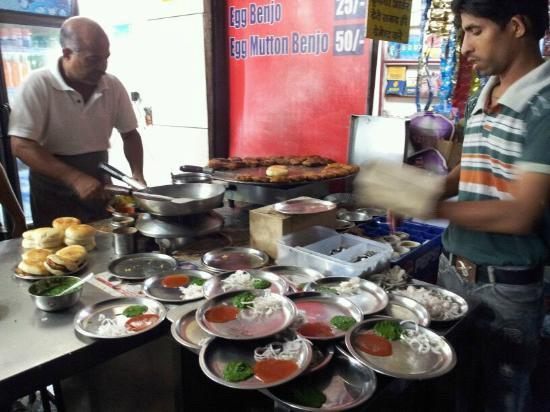
It's a bun with tikki or omelette inside it served with onions and chutney. They call them 'benjo'. Yep. Benjo! This is a hindi-speaking state for god's sake! For my still-a-teenager mind, ordering 'ek benjo' loudly was great fun. That it tasted great was a bonus.

Lunch at the summit (I had come there for work remember?) was completely an Indian mela. All the 'global' investors were running around for plates, clamoring for food and in front of the kulfi stall, acting like refugees being handed out food packets. I skipped it. It was a good decision considering what I did for dinner.

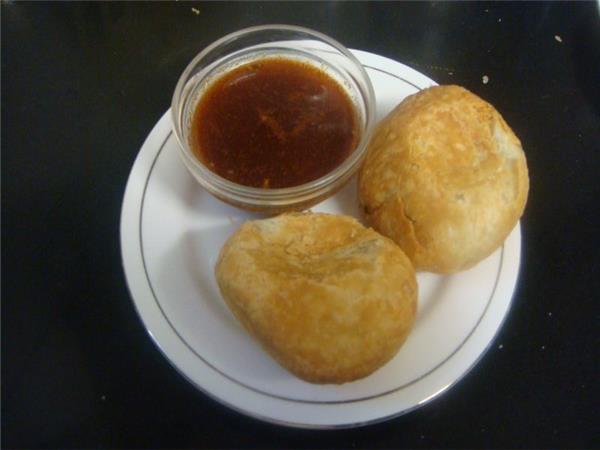
I went with a group to Sarafa Bazaar. This bazaar is in a gali in a proper Indian market which has many shops, narrow lanes and a huge crowd. It's not a place which millennials haunt which is a pity. Sarafa Bazaar saw Ghengiz Khan assault on food that night. First I went for the Indore trademark Kachori. Ate two types of it.
Kachori
Kachori
Then came Sabudana Khichdi which like everything Indori had more namkeen and sweetness than what I am used to. That did not prevent me from polishing off a plate of it.
Sabudana Khichdi
Sabudana Khichdi
I changed the food genre completely and went for a cold, sweet and extremely colourful Kulfi falooda which looked somewhat like this.
Kulfi Falooda
Colourful Kulfi Falooda
There was still a long night ahead. Did I mention that I was planning to eat light on this trip? Next stop was Joshi Dahi Bada, a place which you cannot afford to miss. The owner, Mr. Joshi I guess, loves showing off in front of new customers and it is fun watching him do this thing. Noticing that I was new, he called me over and asked me to sit near him while he prepared our dahi bada plate.
Joshi and my bonding time
At Joshi Dahi Bada
During his preparation, he will throw the plate full of yummy dahi badas up in the air and catch them intact. That's how he builds his USP.

Joshiji throwing the plate in the air
While we were eating, we wanted a dahi refill. He specifically asked that I come and get the refill. So I did. Then he showed me his other act - of putting four types of masala in one chutki. He somehow stores all four of them in his fingers when he puts his hand inside the masala dabba once but then puts each one separately in four strokes without getting more masala. Fascinating. Dahi bada and a magic show combined. At his shop, I also tried Bhutte ka kees for the first time.

There was this poster of Shahi Shikanji. Normally, shikanji is lemonade (nimbu pani) for me. But here, it is a thickened milk drink with lots of dry fruits inside. My friends told me that it was very very very heavy so I thought that I shall skip it for another day. I rounded up the dinner with alu patties (which really are not patties but pakodas) and one more helping of dal kachori. A night well spent I must say.

The next morning started with a bang. I landed at chappan dukaan like a coke addict in need of a fix. I cleaned off a plate each of Kachori and Alu Patties (pokadas elsewhere). Then I saw Shahi Shikanji and went for it. It was delicious! I patted my burgeoning stomach and made my way to the summit for a nice nap.

The dinner started with an Egg mutton benjo.
Benjo
Benjo looks simple but is yummy!
Then I tried Bhel puri. No points for guessing - it was sweeter and had more namkeen. However, I didn't like it as much as some I have had in Mumbai.

For better or worse, India doesn't have a lot of franchise chains for Indian street food. There's one for Vada Pav. I haven't come across other very popular ones. But in Indore, I saw the first franchise chain of Pani puri. These were street stalls that advertised 6 or 9 types of flavoured water like teekha, hing, pudina, khatta mitha, jeera, imli and keri. Keri was my personal favourite and I had second helping of that flavour. The stall owner turned out to be the franchise owner and he was very nice. He gave me TWO sukha puris after I finished. He surely knew how to win my loyalty. Enough of these appetizers. I wanted something filling. The chinese and rolls place caught my eye. I sauntered over there and looked at the menu. The smell was very tempting. I ordered the healthiest thing on the menu - A butter fried egg chicken mayonnaise roll. I still haven't been able to burn off the fat from that roll but it was totally worth it. In India, the culture says that every meal should end with sweets. Who am I to argue with Indian sanskriti? So I scraped clean a plate of Ras malai. Contented sigh. It's a pity that Bombay sucks when it comes to sweets and ras malais. On the way back, I spotted a pan-wala advertising a khushboo wala paan. My curiosity got the better of me and I walked back to the hotel chewing a khushboo wala meetha paan.

My final day involved a repeat of some of my favourite dishes. Breakfast consisted of Poha, Kachori, Dhokla and Sabu Dana Khichdi. Early evening dinner consisted of a soda lemon, dabeli (this was also very good and reminded me of my childhood dabelis in Gujrat), another egg mutton benjo and the multi-flavoured Pani Puri.

I am pretty sure that a few more days and I would have blocked all my arteries. Which is why my advice to everyone is that if you value your life, do not go to Indore! It's a food trap.

Friday, September 12, 2014

मेरी मातृभाषा - Meri Matrabhasha

आज मैं तुम्हें लिखने में इस्तेमाल कर रहा हूँ. कई बरस बीत गए हैं.

बोलना सुनना तो बहुत होता है तुममें. पर उसमे भी कई शब्दों के लिए अंग्रेजी का सहारा लेना पड़ता है. ऐसा नहीं है कि तुम्हारे पास उन अर्थों के शब्द नहीं है पर न जाने क्यूँ साधारण से शब्द भी अब तुममे नहीं आते. तुममे लिखना-पढ़ना तो बिलकुल नहीं होता. जंग लग गया है दिमाग के उन कोनों में जहां तुम्हारे शब्द छुपे बैठे हैं. ये लिखते हुए भी मैं कई शब्दों के बारे में सोच में पड़ जाता हूँ. अनिश्चित सा हूँ तुम्हें लिखते हुए.

तुम्हें पढ़ना भी कम हो गया है. स्कूल के बाद तो कभी तुम्हारा कोई उपन्यास ही नहीं पढ़ा. बरसों से अंग्रेजी में ही पढ़ रहा हूँ. एक दूरी सी आ गयी है हमारे बीच. तुम्हें पढ़ना अजीब लगने लगा है. अंग्रेजी का सहारा लेना पढ़ता है. विज्ञान, कहानियां, उपन्यास, सब कुछ अंग्रेजी में ज्यादा अच्छे स्तर का मिलता है. ज्यादा मिलता है. (अब मुझे ‘स्तर’ ही ध्यान नहीं आया. क्वालिटी और स्टैण्डर्ड ज़रूर दिमाग में आये)


थोड़ा दुःख होता है कि मेरी अंग्रेजी का स्तर तुमसे अच्छा है. मुश्किल विचारों को मैं सिर्फ अंग्रेजी में ही प्रकट कर सकता हूँ. वाद विवाद में अपने आप उसकी तरफ मुड़ जाता हूँ. परायों से बात करने में सबसे पहले अंग्रेजी ही निकलती है. ‘छोटे’ आदमी से तुममे बात होती है. ‘बड़े’ आदमी से अंग्रेजी में.
पर अपनेपन का एहसास तभी होता है जब मैं तुम्हारा इस्तेमाल करता हूँ. विदेश में ज़रूर तुममे बात करता हूँ. अपनों से बात तुमसे ही की जाती है. अब जब भी तुममे कहानियां पढ़ता हूँ, दिल के उस तार को छू जाती हैं जो कोई अंग्रेजी कहानी नहीं छू पाई. अंग्रेजी पिक्चर में जब तक subtitles ना हों, तब तक मुझे पूरी तरह विश्वास नहीं आता कि मैंने सही समझा है कि नहीं. गानों के शब्द समझने के लिए काफी प्रयास करना पड़ता है.

ऐसा क्यूँ है? क्या ये ज़रूरी है कि अंग्रेजी के करीब आने के लिए तुम्हारा साथ छोड़ना पड़े.
इससे पहले तुम पराई हो जाओ, मैं तुम्हें अपना बनाए रखना चाहता हूँ. वापस पढ़ना चाहता हूँ. लिखना चाहता हूँ. और इसके लिए मुझे अंग्रेजी का साथ नहीं छोड़ना पड़ेगा. और न ही उन भाषा आंतंकवादियों के साथ मिलना पड़ेगा जो शुद्धता और संस्कृति के नाम पर तुम्हें और तुम्हारे चाहने वालों को सीमित रखना चाहते हैं. हो सकता है कि वर्तमान में तुम्हें कुछ शब्द दूसरी भाषाओं से उधार लेने पड़ें. पर वो स्वाभाविक है. उससे तुम्हारा स्तर और अपनापन कम नहीं होता. बढ़ जाता है. और कुछ समय में, वो अपने ही हो जाएंगे.

आधुनिक विज्ञान, विचार और शिक्षा तुम्हारे द्वारा नहीं हो सकती क्या? क्यूँ तुम्हारी किताबों का स्तर निचला रहे? जब हमारा समाचार, सिनेमा और अपनेपन की बातें तुममे हो सकती हैं तो क्या हम तुम्हारा दायरा बढ़ा कर दुनिया के ज्ञान और विज्ञान को व्यक्त नहीं कर सकते? क्या तुम्हारे ही माध्यम से दुनिया को तुम्हारे चाहने वालों के पास नहीं पहुंचा सकते?

कर सकते हैं. मैं प्रयास ज़रूर करूँगा. कुछ और न सही, वापस तुम्हारे करीब तो आऊंगा. 

Wednesday, September 3, 2014

Will you beat me?

We have recently revamped our ‘basti’ library. Xook (pronounced zook) Books is its new name. We are trying everything to spread the word and get kids into the library. We are quite innovative about it too. Our strategy is that we stand on the road, stop kids walking on the road and ask them to come to the library. Does it actually work? Well, it does. A lot of them walk in after asking questions like – "What kind of books?" 
"Is there a fee?"

A few days back, my mother stopped a small boy and asked him to come and explore the library. 
"What's there?"
"It’s a place for you to read." 
The boy was a little skeptical. He asked – 
"I can read anything?!"
"Yes, you can read anything."
"If I don’t read, you will not beat me, will you?"

She was stunned. Speechless. She wanted to embrace him, comfort him and say – 'We will not beat you. Ever!'

Beating children is widespread in India. Everyone does it - parents, relatives, teachers, principals. This report, though slightly old, highlights the issue of corporal punishment. As this article mentions- 

"Despite being outlawed by the Right to Education Act in 2009, corporal punishment continues unabated in India’s schools. Just some headlines from the last few weeks. Jharkhand: "Teacher beats 8 year old to death." Ghaziabad: 6-Year-Old Allegedly Beaten by Teacher For Not Doing Homework. Howrah: "Class Eight Student Allegedly Beaten with Iron Chains by Teacher." One teacher in Kakinada did not even spare visually challenged students, beating them mercilessly."

A couple of days back, a new boy walked into the library. He looked a little lost so our librarian made him sit down and read him a story. After finishing the story, she told him to wander and explore the books. He went through multiple books before choosing one and sat down to read it. It appeared like he was struggling with it. Seeing him struggle, our librarian got up to help him. To get a better look at the book, she moved his hand. His hand automatically turned with palm facing up – prepared to be caned. He pleaded - 
"No. I am reading. Don’t hit me."


When I heard about it, I was disturbed and shocked at the instinctive sense of fear. Violence and fear is ingrained with reading and studying. However, what happened next gave me hope and belief to continue to do what we do. One of our 'Xook-ie' (yes, that's a word) kids looked at him and informed him – 
"Arey! Don’t be scared here. Nobody hits anyone here. You are safe here."

There is just joy of reading here!

This post has also been published on Indiateach - The Indian education blog.

Saturday, March 29, 2014

Sustainable Political Engagement

Throughout my life, I have never followed politics. Political people, regions, parties, portfolios were alien to me. The only exception was during Obama's first election campaign. There was something about his oratory that captivated me (like a billion other people probably). I watched a lot of his speeches, sometimes multiple times. It was unfortunate that my political interest in US at that time was exponentially higher than it had ever been for Indian politics. This will not be true for everybody but I have not engaged, or seen a lot of people engage, in political debate and discussions a lot. I have mostly seen political discussion done by a handful of my friends.

There is widespread abandonment of public systems in our country, especially by the middle class - education, healthcare, urban spaces, environment, water, politics. As we have moved from a market economy to a market society, the basic public services are now privatized and intersection of different layers of society is decreasing. 

Still, things have changed quite dramatically in the past few months when it comes to political engagement. I have not seen an election where everybody is so passionate and worked up about the ideologies and people they support. Painstaking research is being done by individuals to validate their beliefs and claims. 

Let's take this incident. 

I post an article about a certain political candidate on my facebook wall. One my friends from IIT comments:

"There are bound to be separatist and sadist sections in every think tank, but does that affect the health of the country as a whole?" 
... And by saying that she was well dressed and all, is he saying that the poor need not have a sense of morality. Using nazi reference to sensationalize one's view is definitely the last straw, that too with complete disregard to the efforts that went in to ensure the riots from causing much more loss of life. A typical self righteous, bourgeois point of view from a half informed author."

I must admit, I was quite surprised. It was not because of that person's belief but because of the heavy language used. 'Sadist', 'self-righteous', 'bourgeois'! And not coming from a JNU or law student but from an IITian who I least expected it from. What happened to IITians not being able to understand political science and all of these 'intellectual' subjects? 

Another friend of mine (again IIT), posts these updates on his wall -  

Sample 1 - "BJP and Congress hid themselves behind the section 22 of the NCT act of Delhi. This section requires a prior assent/sanction of Central Government with respect to Finance bills to be introduced in Delhi assembly. 
First of all, the same NCT act says in the subsequent section 26, that even if the prior approval is not taken, if the LG and in some cases the President gives assent to the bill after the assembly passes it, the bill will be considered valid. 
Second of all, DLP is not a finance bill. The expenditure of running Lokpal in Delhi will come out to be 50-100 crores which the Delhi government can fund from its own budget."

Sample 2 - "Even the Rule 55(1-a) transaction of Business rules state that LG only needs to refer those bills to Centre which are passed by state assembly and are repugnant with the Central law. 
Delhi government or any state government does not work 'under the supervision' of Union government. Constitution provides for 3 separate lists namely the union list, state list and concurrent list. If the Home ministry denies permission for any bill on state/concurrent list to be tabled in a state assembly, it would mean an encroachment by the Centre on the rights of the State government. The state government is the supreme legislative body in the state."

I am shocked! This guy was posting troll pictures and love songs a few months back. Did he just finish a crash course under the Chief Justice? 

As long as the debates and arguments remain civilized and tolerant, all of this is amazing. People start participating in public affairs and politics becomes a service for the public once again, we might be able to say that we are a well-run democracy instead of just surviving. This is cannot happen only in this election. This engagement has to continue, irrespective of whoever gets elected. 

I saw this video today and it tells everything I want to and more. Millions like Shyam Negi - keeping democracy alive since 1951. 


Sunday, February 2, 2014

Mohtarma visits the library

Preeta finally visited the library after hearing about it for a year. On my request, she has penned down her experience there. This is the second guest-post on the blog, not counting the student writing posts, and as usual, the writing is much better than what is normally written on this blog. Hopefully, some of it will rub off on my writing too.

---- Mohtarma (Preeta) Speaks -----------------------

I was visiting Bombay in my first vacation in over a year, and I had this library on the list of places I had to visit. I had heard about it since the days of its inception – from stories of painting the walls to acquiring bookshelves. Finally, in January, I came around to visiting it. I had a couple of hours to myself before the children started coming in, which I spent browsing the books and revisiting the books that I had read when I was a kid like the Malory Towers books and the story about the enormous turnip. Before I realized it, the children started streaming in – some of them directly from school, without even having changed out of their uniforms or having lunch.

The curiosity about the new visitor, yours truly, spread like wildfire. “Nayi didi aayi hai”, the word went around. Soon, they took it upon themselves to show me around – where the library passes were kept, the balcony where they likes to read, where the fiction books were kept, where the science books were kept, and where the games were kept. The sense of pride and ownership they felt about this place was amazing.

They asked me about myself, and were eager to talk about their lives. When they heard that I was from Delhi, they even asked me about the jhadu party and how they won the elections.

My conversations with these kids were refreshingly honest – it took me a while to register how differently I was used to acting in a profession where every word is weighed to meet a certain purpose. When they asked me why I was visiting, I told them, “I love reading, and Prachur bhaiya told me about your library”. They told me about their favourite stories, or the homework assignment that they were working on and gossip about who got scolded in class for what mischief.

I read with some of the kids – watching their expressions change as they slowly moved from word to word. They took up books to satiate a curiosity, and not out of compulsion. To see them inspired by stories like Malala, to be scared of gruffalos, to be excited about the history of different countries reminded me of my own reasons why I enjoyed reading. Some of them played games. They involved me in their games, and they showed me how to play. Their acts of spontaneous kindness and unguarded friendships made me feel completely at home.


These were extremely smart, sensitive and impressionable children. They had a childhood very different from what I, or most people I know, had. And still, I could see in them the same excitement that I feel in turning the page of a book. Between long school hours, tuitions and work, the tiny room above the Mahalakshmi dairy in Kamraj Nagar was to these kids an alternative universe. A small space, and window of time, where the possibilities are endless. Everybody deserves that. 

Saturday, December 14, 2013

Burden of the Indian expectation for AAP

I confess that I am not a follower of politics at all. I don’t know the names of the parties, their ministers and much political history. However, there are moments of public interest when my easily distracted mind gets interested in the proceedings. Sadness at the fall of Vajpayee’s government and inspiration on hearing Obama’s oratory are previous instances that come to mind. Delhi elections this year will be another. Arvind Kejriwal has brought unimaginable interest in these elections. There is an interesting event unfolding daily. The underdog beating the giant. The hung assembly. Reluctance of the big-wig parties to form the government.

I personally think that Kejriwal has already done a fair bit. He has inspired countless people and tried to redeem their faith in politics. Hundreds if not thousands will join politics with purer motives in the years to come. They have an avenue. They have a precedent. They might not know the policies, administrative structures and many other things complicated things. But some of them will learn and try to make things better. Maybe some will form a separate party. In any case, all of them will be working for betterment in their own ways. Institutional ways. Not with hunger fasts like an attention seeking child or illogical, nonsense statements like our very own douchebag, Baba Ramdev. We need these motivated people in our political scene. And India might have a lot to thank Kejriwal for in the years to come.


I think Indians have a long history of suffering from the ‘too-many-expectations’ syndrome. We are so devoid of people to look up to that we want the single person, who we look up to, to do everything. It doesn’t matter if we don’t give them adequate support or training.
Sachin should win all our matches single-handedly. We will criticize him even though we can’t provide him 4 other half-decent batsmen who can provide him adequate support or 4 quality bowlers so that the poor guy doesn’t come out every time with a mountain to chase. IAS and other 1st tier officers should be able to solve all administrative problems of this country with a team of moronic and largely untrained 2nd and 3rd tier 'support' staff.


It is very hard to be a good son to this country. It is like the parents who have given up on the other children and accept their misdemeanors with a shrug saying ‘that’s how who they are’. But the good son must do everything. He must sacrifice, slog his ass off and not enjoy like the other children because that’s his moral duty. And he must remain committed to it in spite of the criticism that is deserved, of course, on not doing a good job. 

How is this relevant? Coming to our current scenario, AAP has been invited to form the government by the Delhi Lt. Governor. BJP, the party with the largest number of seats, has declined very nicely. AAP has asked for some time to make its decision. It has also asked clarification from the Congress and BJP party leaders on their stance on various issues.

Hindustan Times today (15th December), printed the results of its online poll -
Is Aam Aadmi Party running away from responsibility by not coming forward to form a government in Delhi?
Almost 50% of the people have said 'yes'. More than the people who have said 'no'.

I have been reading a few comments on various articles and posts. There are numerous comments condemning AAP for not taking the initiative to form the government. Comments such as these -

“Don't waste your time on AAP. I feel they have missed the bus. This is no way to negotiate. It is running away from responsibilities....”
“Arre bhai to form govt. to do all this naa... why all this drama... if they won't agree on some issue then expose them by being in govt. .. truth is AK is a big Phattu!!”

This post is not about the competency of AAP or Kejriwal. It's not about who should form the government. It's also not about Sachin's performance. It is about what people, who I will call langurs, think and expect.
The Indian Langur - no patience, no support, only result
 The langurs who are not involved except during their coffee chat discussions in which they pass judgments like veterans of the craft. And frankly, langurs do not really affect the proceedings. However, I still have a hard time grasping the langur's opinion. 

I don’t understand this. First of all, why are they, the langurs, not saying the same things for BJP? After all, BJP does have the highest number of seats. Why is BJP not taking the initiative to form the government? Hasn’t it made promises to people? Is it not supposed to work for the people and care for their well-being? Or have langurs already given up on it thinking – ‘Arey, wo to waise hi harami hain. Unse kya baat karni?’ AAP has not won majority. People have not given it that kind of support. But we seem to say to AAP - 

You have the second most seats as a sign of our support but you should take the initiative to form the government. We also want you to deliver on all your promises immediately. Never mind that the other parties have not done anything for 60 years. I know that your people are novices and these issues are deeply entrenched and not easy to solve. Yet you must do it. Without majority. ASAP. With the other parties providing obstacles in your path. And we don’t want you to be sure of the support that you get from the other parties because that’s their job of opposing you.

So not only does Sachin have an incompetent team, but the other batsmen are actively trying to get him run out. But he must lead India to victory because we langurs can have expectations only from Sachin. There is no hope from the rest so let them indulge. Many greats have failed and given up because of our attitude. It's alright. We will resign ourselves to our fate and go back to our original state.